This year, 1.6 trillion pensions will be guaranteed for enterprises to reduce social security.
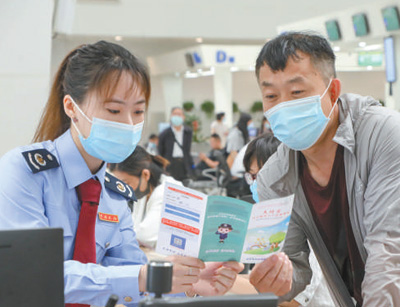
On May 25th, in the administrative service center of Huai ‘an City, Jiangsu Province, the tax officials were introducing the online social security payment method to the payer, so that the payer could run less errands.
People’s vision
Since the beginning of this year, in order to alleviate the difficulties of enterprises, stabilize and expand employment, China has implemented a phased policy of reducing and exempting social insurance premiums for enterprises. Affected by this policy, in the first half of this year, the total income of the three social insurance funds was 2.35 trillion yuan, and the total expenditure was 2.68 trillion yuan, which was greater than the income. In this context, is pension payment guaranteed? How to realize the sustainable development of social security system? Our reporter conducted an interview on these issues.
Social security "free from slowing down" helps enterprises reduce their burdens and add vitality.
"The social security relief policy has helped us reduce more than 400,000 yuan every month, which is really ‘ Send charcoal in the snow ’ It has greatly reduced the labor cost and operating burden of enterprises. " Ms. Liu, a financial officer of Debon Logistics Co., Ltd. in Zhongshan City, Guangdong Province, said.
According to reports, Zhongshan Debon Logistics Co., Ltd. has more than 800 fixed employees. Due to the epidemic prevention and control, the company’s business volume has declined, but the company’s fixed expenses such as labor, rent and water and electricity have remained basically unchanged. "The average monthly cost of the company is about 3.25 million yuan, of which the labor cost is close to 50%, and the social security fee of 400,000 yuan is reduced, which makes the company confident to survive this difficult period." Ms. Liu said.
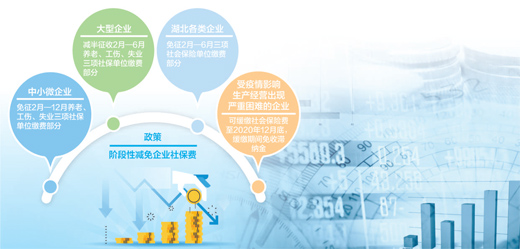
In order to alleviate the business difficulties of enterprises, on February 20th, the Ministry of Human Resources and Social Security, the Ministry of Finance and the State Administration of Taxation issued the Notice on Reducing Social Insurance Fees of Enterprises by Stages. On June 22nd, the three departments issued a notice again to extend the implementation period of the social security reduction and exemption policy. After the superposition of the two policies, the list of "burden reduction" is as follows:
For enterprises, small and medium-sized enterprises can be exempted from the unit contributions of pension, work injury and unemployment from February to December 2020; Large enterprises will collect half of the contributions of three social security units from February to June 2020, including pension, work injury and unemployment; For all kinds of enterprises in Hubei, the payment of three social insurance units from February to June 2020 will be exempted. In addition, enterprises that have serious difficulties in production and operation due to the epidemic situation can postpone the payment of social insurance premiums until the end of December 2020, and the late payment fee will be exempted during the deferred payment period.
For individuals, the lower limit of the social insurance individual contribution base can continue to implement the 2019 standard; Individual industrial and commercial households and all kinds of flexible employees who participate in the basic old-age insurance for enterprise employees in their personal capacity may voluntarily suspend the payment if it is really difficult to pay the basic old-age insurance premium. For the unpaid months in 2020, they can pay back before the end of 2021.
Nie Mingxi, director of the Pension Insurance Department of the Ministry of Human Resources and Social Security, explained that under normal circumstances, the upper and lower limits of the annual social security contribution base will be adjusted according to the average wage growth in the previous year. At present, about 60% of the employees pay the old-age insurance premium according to the lower limit of the payment base, mainly small and medium-sized enterprises and their employees with relatively low wages, as well as most flexible employees. "The new policy stipulates that the lower limit of payment this year can implement last year’s standards, which will appropriately reduce the payment pressure of these units and individuals this year."
"After the introduction of this relief policy, it is estimated that the social security fee will be reduced by 1.6 trillion yuan for enterprises throughout the year." Nie Mingjuan said that if the hikes of the pension insurance rate from January to April are added compared with the same period of last year, and the reduction amount of the policy of reducing unemployment insurance and industrial injury insurance rates by stages is continued throughout the year, the total reduction of the three social insurances this year will reach 1.9 trillion yuan.
"Since 2015, the state has lowered the social security rate six times, and the total rate of five social insurances for employees has dropped from 41% to 33.95%, which has reduced the cost for enterprises by nearly one trillion yuan. Comparatively speaking, this year’s social security ‘ No mitigation ’ The policy is unprecedented. " Nie Mingxi stressed.
What surprises enterprises even more is that the social security "exemption from slowing down" has achieved "exemption from filling in forms and application", which was initiated by tax authorities or human resources departments in batches. Eligible units do not need to apply and provide materials, and the system will automatically reduce or exempt them.
"When I reconciled on March 8, I found that the company’s bank account received four social security fee refunds totaling 418,900 yuan." Ms. Wang, cashier of Zhongshan Debon Logistics Co., Ltd. said, "Earlier, we received a text message from the government department, reminding the company that it can enjoy social security fee reduction. I didn’t expect to return the social security fee paid in February so simply and quickly! "
The short-term income and expenditure pressure of the fund can be controlled, and the system ensures that pensions are paid in full and on time.
According to statistics, among the 1.6 trillion yuan of social insurance premiums reduced in the whole year, the reduction of enterprise pension insurance premiums will account for 1.5 trillion yuan. Will this affect the operation of China’s endowment insurance fund? Is there any guarantee for pension payment?
Indeed, the social security "no slowdown" policy will have a certain impact on the operation of the endowment insurance fund.
Kevin·Z, a professor at Peking University University of Economics, calculated an account for the reporter: In 2019, the income of the basic old-age insurance fund for urban employees was 5.29 trillion yuan, and the scale of reduction and exemption of 1.5 trillion yuan was equivalent to 28% of the total income of the fund last year. As a result, the accumulated balance of the old-age insurance fund will decline in 2020. "We expect that by the end of the year, the balance of pension funds will be about 3.8 trillion yuan, a year-on-year decline of 30%."
However, the experts interviewed said that the short-term income and expenditure pressure of pension funds is relatively controllable.
Explore the family — — Thanks to years of rapid economic development, China’s enterprise pension insurance funds have accumulated considerable "family wealth". By the end of last year, the accumulated balance of the national enterprise pension insurance fund was 5 trillion yuan. In addition, there is a national social security strategic reserve fund of more than 2 trillion yuan, which has strong overall support capacity. "Although the social security reduction and exemption policy will make some provinces have a situation in which the funds are not paid in the current period, the historical balance of most provinces can ensure that pensions are paid in full and on time." Kevin·Z said.
Look at the operation — — At present, the fund operation is generally stable. Nie Mingjuan introduced that through the dispatch analysis of the operation of the endowment insurance fund in the first half of the year, the implementation results of the phased relief policy were in line with expectations. By the end of June, the accumulated balance of the national enterprise pension insurance fund was still 4.77 trillion yuan.
There are subsidies — — The central government continued to increase subsidies to the basic old-age insurance fund. In recent years, the central government’s financial subsidies have not diminished, especially in the central and western regions and old industrial bases where the contradiction between fund revenue and expenditure is more prominent. "In 2019, the central financial subsidy reached 526.1 billion yuan, and the subsidy will be further increased this year. Local governments at all levels are also further adjusting the structure of fiscal expenditure and increasing subsidies for endowment insurance. " Nie Mingxi said.
At the same time, for the provinces with difficulties in issuing pensions, we will also increase the adjustment and support of funds. "This year, the proportion of central adjustment of endowment insurance funds will increase to 4%, and the scale of adjustment funds will reach 740 billion yuan, with inter-provincial adjustment of more than 170 billion yuan." Nie Mingjuan said that at the beginning of April, the central government allocated the adjustment funds for the first quarter, and all the adjustment funds for the second quarter in mid-June were also allocated, which strongly supported the pension distribution work in difficult provinces.
Supported by various policies, this year, China has not only ensured the timely and full payment of pensions, but also raised the pension standards again. On April 10 this year, the Ministry of Human Resources and Social Security and the Ministry of Finance announced that they would continue to raise the basic pension for retirees at an adjustment level of 5%. This is the sixteenth consecutive year since 2005 that China has adjusted the basic pension for enterprise retirees, and it is also the fifth consecutive year since 2016 that it has uniformly adjusted the basic pension for retirees of enterprises, institutions and institutions.
Up to now, various provinces have determined the pension adjustment plan for 2020. Many provinces have reissued the rising pensions before the end of July, and some provinces have also announced the per capita increase in pensions. For example, retirees from enterprises, institutions and institutions in Qinghai increase their basic pension by about 218 yuan per month; The per capita pension for retirees in Ningxia is increased by 172 yuan per month; Yunnan retirees increase their pensions by 167.7 yuan per month; Inner Mongolia’s pension adjustment per capita increased by 147.2 yuan per month.
Steady progress has been made in overall planning at the provincial level, and a multi-level endowment insurance system has been established.
With the acceleration of China’s aging, in the medium and long term, the income and expenditure pressure of the future pension fund is not small.
"At the end of last year, the accumulated balance of the basic old-age insurance fund for urban employees was 5.46 trillion yuan, which seems to be quite large, but this 5.46 trillion yuan is only equivalent to the number of months that can be paid for 13.3 months." Kevin·Z said that the most important thing is the fundamental institutional arrangement to ensure the long-term timely and full payment of pensions.
Tap the potential internally, improve the overall planning level, and enhance the ability to adjust the surplus and deficiency.
On January 1st this year, all the income of the basic old-age insurance fund for enterprise employees in Anhui was collected into the financial special account of the provincial social security fund, and all the expenditures were also uniformly allocated by the provincial financial special account. At this point, Anhui has realized the unified collection and expenditure of endowment insurance funds in the whole province.
Like Anhui, as of June, 26 provinces have achieved standardized provincial-level co-ordination, and the remaining provinces will also achieve provincial-level unified fund collection and expenditure before the end of this year. Nie Mingjuan said that the realization of standardized provincial-level pension pooling will not only further improve the unified dispatching and utilization capacity of funds in the province, but also ensure the issuance of pensions in the province, and lay a good foundation for the next step of implementing national pooling.
Kevin·Z believes that improving the overall level of pension funds is more conducive to revitalizing the deposited funds in various places and solving the structural problems of pension payment.
External financing, accelerate the allocation of state-owned assets to enrich the social security fund, and improve the long-term support capacity of funds.
On July 10th, last year, the executive meeting of the State Council proposed that 10% of the state-owned shares of large and medium-sized enterprises and financial institutions owned by the central and local governments and controlled by the state should be transferred to the Social Security Fund and relevant local undertakers before the end of 2020. By the end of 2019, the central level had completed the transfer of state-owned capital of 81 central enterprises and central financial institutions in four batches, with the transferred state-owned capital reaching 1.3 trillion yuan.
"Enriching the social security fund by transferring some state-owned capital is a major advantage of the Socialism with Chinese characteristics system, which can really increase the income of the fund." Kevin·Z said.
At present, the pension replacement rate of urban workers in China is about 44%. According to international experience, an acceptable pension replacement rate (public pension+private pension) should reach 70%. "Therefore, under the background of increasing pressure on public pensions, vigorously developing private pensions and actively building a multi-level old-age insurance system will help further improve the level of old-age security and help capable retirees further improve their quality of life." Kevin·Z said.
Chu Fuling, a professor at the Department of Labor and Social Security of the School of Insurance of the Central University of Finance and Economics, said that as the first pillar, the development goal of public pension is to provide basic old-age security for the general public, achieve full coverage of the system and ensure fairness and sustainability; As the second pillar, enterprise annuity should strive to provide an average pension replacement rate of 15% to 20% for enterprise employees; As the third pillar, commercial pension insurance has the greatest potential, which can make the general public free from the restrictions of employment situation and employment unit conditions and have the opportunity to establish individual commercial pension plans with the support of tax policies.
In May 2018, a pilot program of personal tax deferred commercial endowment insurance was launched nationwide, which provided new choices for workers. When residents take out this insurance, the insurance premiums paid are allowed to be paid before tax, and the pension accumulation stage is tax-free, and they will be paid when they receive the pension after retirement. "At present, China’s pension insurance ‘ The third pillar ’ It is still relatively weak and needs the joint efforts of government departments and market players to jointly build a more reasonable pension insurance system. " Yan Fuling said.