On September 23rd, the 19th Asian Games was grandly opened in Hangzhou, Zhejiang Province, accompanied by the burning flame on the main torch platform. It is worth noting that zero-carbon methanol, the fuel used to ignite the main torch of the opening ceremony, was used in large-scale sports events for the first time in human history. As a new species of the Games, the new application of zero-carbon methanol is also a scientific exploration and vivid practice of green new energy, which is in harmony with the first carbon-neutral Asian Games being built in Hangzhou.
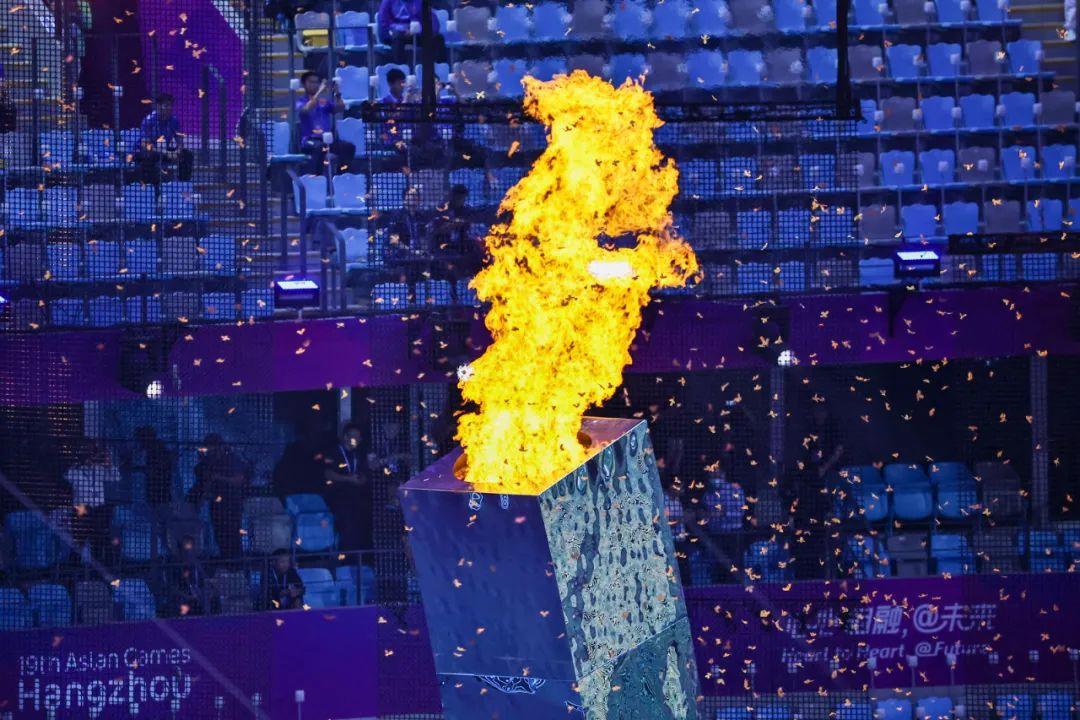
Methanol is recognized as an energy source with high combustion efficiency, clean emission, renewable and convenient transportation. Compared with liquefied natural gas and other fuels, zero-carbon methanol fully embodies the concept of "green, intelligent, thrifty and civilized" for the Hangzhou Asian Games;
Compared with traditional fuels, methanol has a higher energy density. The main torch tower lit this time only needs 550kg fuel when burning for 1 hour in the state of fire;
At the same time, methanol has considerable extreme weather resistance, and it will not go out under 11-level gale and rainstorm with rainfall of 50-100 mm.
More importantly, methanol is a relatively safe fuel, its lower explosive concentration is higher than that of hydrogen and natural gas, and its explosion-proof requirements are lower. As a liquid, it can be stored and transported at atmospheric pressure and is convenient for replenishment.
The zero-carbon methanol used to ignite the main torch is produced by Geely Holding Group, also from Zhejiang, and provides technical solutions. It is produced by Anyang Green Methanol Factory, which is invested by the former, and is synthesized by hydrogen (H2) in coke oven gas and carbon dioxide (CO2) captured from industrial tail gas.
According to statistics, every ton of zero-carbon methanol produced can absorb 1.375 tons of CO2, and realize zero-carbon emission in the cycle, which is a green energy with the property of "carbon neutrality". Taking Anyang Green Methanol Factory as an example, it can produce 110,000 tons of methanol every year, and directly reduce carbon dioxide emissions by 160,000 tons, thus realizing the resource utilization of carbon dioxide.
Zhejiang is the birthplace of the theory of "two mountains". This year’s Hangzhou Asian Games put "green" in the first place, from the construction of competition venues to the manufacture of tables and chairs in the venues, from the supply of clean energy to the production of competition materials, from food security to the establishment of a "waste-free Asian Games factory", all of which reflected the beneficial exploration of the Hangzhou government in implementing the "two carbon" strategy and "two mountains theory" and promoting the green energy revolution.
As a globally recognized new clean and renewable energy, zero-carbon methanol is likely to become a "super fuel" to solve the energy security and double-carbon problems. The successful application of the main torch tower in Hangzhou Asian Games also provides an excellent example for the industrialization breakthrough of this new energy.
Under the goal of "double carbon", energy reform has become the general trend. Energy security is the top priority of national strategic security. As we all know, China’s energy structure is rich in coal, less in gas and poor in oil. According to statistics, in 2022, China’s external dependence on crude oil will still exceed 70%, so it is urgent to ensure energy security.
In this context, methanol energy, with many advantages, has become an ideal new energy source recognized worldwide. Compared with the traditional fuel, it is not only low in cost, but also mature in technology and can be popularized rapidly. Therefore, the development of methanol economy is not only conducive to carbon neutrality, but also can promote the transformation of energy structure and ensure national energy security.
In fact, China is already the largest producer and user of methanol in the world. According to the statistics of China Nitrogen Fertilizer Industry Association, in 2022, China’s methanol production capacity will reach 100.41 million tons/year, exceeding the 100 million tons mark and the output will be about 80.225 million tons.
In addition, the main raw materials of methanol in China are natural gas, coke oven gas, biomass, etc. Hydrogen can be produced from renewable energy, and by effectively capturing CO2, methanol energy that conforms to carbon neutrality can be synthesized. It can be seen that the increase of methanol production in the future will gradually shift to renewable methanol, and China will remain the main producer. The methanol economy thus established can drive chemical enterprises to be green, low-carbon and high-end, which is a great historical opportunity for the transformation and upgrading and high-quality development of energy enterprises in China, especially for small and medium-sized energy enterprises, thus lighting up emerging industries with a scale of trillions.
At present, methanol has been widely used in industries, ships, automobiles and other fields. Among them, automobile is the pillar industry of China. Driven by the relevant state departments, the methanol automobile industry has completed the construction of technology chain, industrial chain and supply chain. On the basis of the pilot project, in 2019, eight ministries and commissions, including the National Development and Reform Commission, the Ministry of Industry and Information Technology and the Ministry of Environmental Protection, issued a special document to promote methanol vehicles, and the promotion of green transportation and the development of methanol economy entered a new stage.
In the eyes of the industry, commercial vehicles are the best carrier for methanol application. Although the number of commercial vehicles is small, it consumes more than half of automobile gasoline and diesel, and emits 56% of carbon dioxide and 80% of PM pollutants: the pollutant emission of a traditional diesel heavy truck is equivalent to 306 passenger cars.
Compared with diesel, methanol can directly and effectively reduce the emissions of pollutants such as carbon dioxide, nitrogen oxides and particulate matter. According to calculation, if half of freight trucks in China use methanol instead of gasoline and diesel, it will not only greatly reduce pollution, but also reduce oil imports by 125 million tons and carbon by 215 million tons every year.
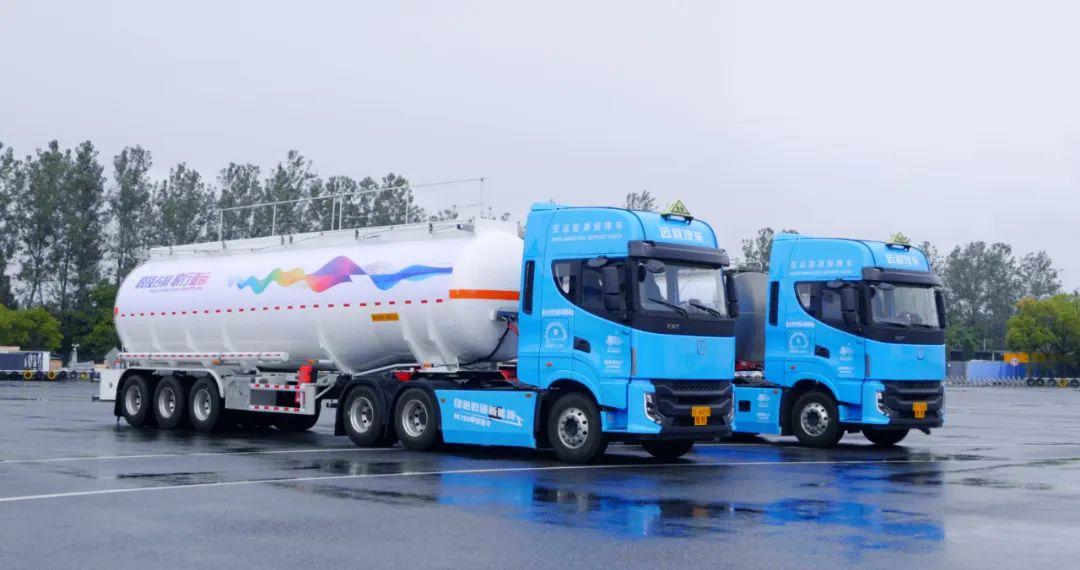
In fact, at this stage, methanol has been well applied in the field of commercial vehicles: the methanol support vehicles for the main torch of this Asian Games all use methanol with the same source as the main torch fuel, which fully demonstrates the closed loop of methanol energy preparation, methanol energy transportation and distribution system and methanol vehicle application. It is the remote Xinghan heavy truck from Geely that connects this ecological closed loop in series.
As the methanol support vehicle for the main torch tower of Hangzhou Asian Games, the long-distance Xinghan heavy truck is powered by alcohol and hydrogen and uses methanol as fuel. Compared with the traditional diesel heavy truck, it not only greatly reduces the carbon dioxide emission in the whole life cycle, but also reduces the fuel cost by 18%-32%, saving 1 yuan money at most per kilometer and greatly reducing the logistics cost.
In addition, the long-range Xinghan H equipped with super-alcohol-electric hybrid will also serve as the mobile studio car of CCTV Chaoyong during the Asian Games to help CCTV news report on the Asian Games.
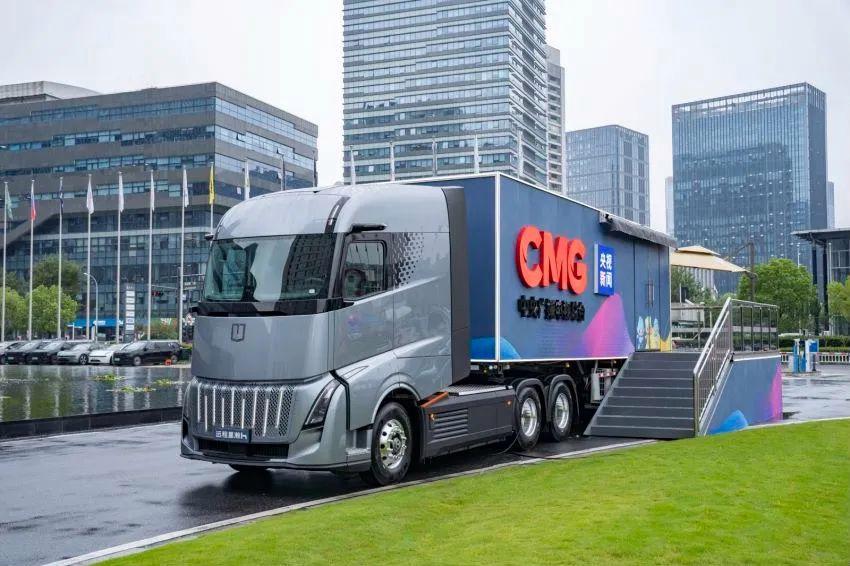
Behind the shining of zero-carbon methanol in the Asian Games is Geely’s persistence in cultivating methanol for 18 years.
Geely started the research on methanol fuel and methanol vehicles in 2005. It is the earliest automobile enterprise in China to set foot in related industries. It has the full chain system capability of methanol vehicles from vehicle R&D, manufacturing to sales, and has developed more than 20 models including methanol passenger cars, methanol trucks and methanol buses. Adhering to the belief of "solving the world’s energy and double carbon problems with green methanol", Geely continued to explore methanol energy preparation, methanol energy transportation and distribution system, methanol vehicle application and other aspects, and gradually formed a carbon neutral solution with full link closed loop.
At present, Geely’s methanol vehicles have operated nearly 30,000 vehicles on a large scale, with a total mileage of over 15 billion kilometers, and it is the only enterprise in the world that mass-produces methanol vehicles and promotes their products to Europe. In the field of commercial vehicles, in 2019, Geely’s Remote New Energy Commercial Vehicle Group released the world’s first methanol heavy truck, which is the only enterprise in China to launch methanol heavy trucks, light trucks, small trucks and buses.
As the first commercial vehicle group focusing on the new energy field in China, Remote New Energy Commercial Vehicle Group has formed a new generation of commercial vehicle products and business development direction with "R&D as the guide and focusing on green intelligence" as the core. Its layout is based on alcohol and hydrogen ecological technology, and a diversified green methanol transport capacity ecology is built through the integrated design of alcohol, vehicles, goods, stations and finance. The successful application of green methanol ecology has also set a China template with important reference value for the global automobile industry to use synthetic fuels.
In July this year, when General Secretary of the Supreme Leader visited Jiangsu, he pointed out: "Energy security and safety are related to the national economy and people’s livelihood, and they are the’ big country’ that cannot be ignored for a moment. It is necessary to accelerate the promotion of key technologies, iterative upgrading of core products and the empowerment of new technology wisdom to improve national energy security and support capabilities. " Under the background that Geely Holding Group and other industry leaders have solved the industry problems and mastered the core technology of methanol vehicles, China is now in the international leading position in the fields of methanol fuel and methanol vehicles.
Ensuring energy security is not only a realistic consideration, but also an insight into the future. Focusing on the "1.2.3.3" ecological strategy, alcohol and hydrogen ecological technology takes vehicle promotion as the core, revolves around the two-wheel drive of capital and product market, the coordinated development of green alcohol preparation, methanol filling and alcohol-electric vehicles, and the three-step development of energy, so as to create a trillion-dollar value green ecological industrial chain with China characteristics.
"After more than 40 years of development, China’s methanol vehicles rank first in the world in terms of industrialization scale. Both technology, products and the whole industry have stood at the forefront of the world, and the overall development trend is very healthy." According to Wei Anli, Secretary General of the Expert Steering Committee for the Promotion and Application of Methanol Vehicles in the Ministry of Industry and Information Technology, the technology chain, industrial chain and service chain derived from methanol vehicles not only contribute to the national ecological environment protection and energy security, but also bring more employment opportunities to the society, which is an effective way to promote high-quality development through energy transformation.
With the help of leading technology and industrial chain construction, methanol economy can not only reduce China’s dependence on external energy, but also get rid of the shackles of potential energy threats brought by the complicated international situation under the unprecedented changes in the past century. At the same time, after electric vehicles, it has opened up a brand-new "overtaking lane" for China in the new energy era. Taking this Asian Games as an opportunity, methanol fuel, methanol automobile and methanol economy are showing the grand blueprint and ambition of China to achieve the goal of "double carbon" by shining brilliantly on the world stage, and continue to inject deep Chinese strength into promoting the building of a community of human destiny.
Source | Observer Network
Reporting/feedback