分类: hanzhen
Stumbling at the historical turning point: the prospect of emerging market economy in 2020-the truth
"I would cross the Yellow River, but ice chokes the ferry, the Taihang Mountain will be covered with snow." Looking back, ten years is a cycle. According to IMF (International Monetary Fund) forecast, the economic growth rate of emerging markets will fall to the lowest level since 2009 in 2019, and the historical logic of mean regression has ignited the market’s longing for its bottoming out. Looking forward, ten years is a turning point. Although the short-term impact may dissipate, the long-term qualitative change has been formed, and it is doomed that history will not simply repeat itself.
Looking forward to 2020, there are three historical turning points on the road of recovery in emerging markets.
First, the main engine entered a period of fatigue.While China’s economy insists on "slowing down and improving quality", the Indian economy still lacks the steady power to take over, and the weakness of "BRICS" will restrain the rebound of emerging markets.
Second, the main mode hit the ceiling.As the debt cycle enters the second half, the debt-driven growth that emerging markets rely on is unsustainable, while the narrow policy space and rising populist risks are increasing the threat of debt deflation.
Third, the old dividend has become a new weakness.As the external pillar of emerging markets, economic globalization is easy to retreat but difficult to advance, and emerging markets will face multiple risk shocks.
Stumbling on the three historical turning points, the growth rate of emerging markets is expected to continue to fall near the low level of the ten-year cycle in 2020. The sharp contrast between the cold growth rate and the hot expectation will constitute the biggest risk of investment in emerging markets in 2020. However, conservatism is still the most important value factor, which will give China economy a comparative advantage and capital favor.
One of the inflection points: As the main engine of emerging markets, the BRICS countries have entered a period of weakness.
Different from the European Union, North America and other regions, the so-called "emerging market" has always been a loose concept, with neither close external geographical connection nor strong internal organizational coordination. Thus, since the beginning of this century, the growth path of emerging markets has been dominated by the BRICS countries relatively independently. Although there are a large number of other emerging market economies, it is difficult to have an important impact. From 2000 to 2018, the contribution rate of BRICS countries to the added value of GDP in emerging markets was about 59%. During this period, the correlation coefficient between the GDP growth rate of BRICS countries and the overall growth rate of emerging markets was as high as 0.93. In 2002, 2008, 2011, 2016 and other years, although the growth rate of other emerging economies has experienced ups and downs, the overall performance of emerging markets is still similar to that of the BRICS countries. Therefore, the trend of BRICS countries directly determines the ups and downs of emerging markets, and the collective weakness of BRICS countries will also constitute the growth turning point of emerging markets.
Looking forward to 2020, this turning point is coming. As the old engine of emerging markets, the current trend of "slowing down and improving quality" of China’s economy continues, and the desired economic growth rate in the future is expected to be steadily lowered, and the demand for other emerging economies will also be weakened.
As a new engine of emerging markets, the Indian economy may not be able to take over smoothly in the short term. On the economic level, since the second quarter of 2018, India’s economic growth rate has declined quarter by quarter, and the unemployment rate has risen to an all-time high, and it is difficult to find signs of improvement in many leading indicators in the near future. This phenomenon shows that in the case of weak structural reform and slow growth of labor productivity, it is difficult to sustain the consumption growth achieved by consuming household savings too quickly, and the demand-side stimulus of Modi government failed to enhance the long-term motivation of India’s economy. On the financial level, among the major emerging market economies, the deterioration of Indian government debt and fiscal deficit is second only to Brazil. At the same time, since the second quarter of this year, the expansion of the trade deficit, the withdrawal of international capital and the fluctuation of the local currency value are jointly weakening India’s foreign debt solvency, so the debt risk is rising.
Except India, due to low investment, high unemployment, high policy uncertainty and geopolitical conflicts, the economic growth rates of South Africa, Brazil and Russia may be slightly restored in 2020, but the rebound space is narrow. Generally speaking, 2020 will be a year in which the BRICS countries continue to be tired. In this context, it is unrealistic to hope that other emerging economies will drive the strong recovery of emerging markets, and the future growth rate of emerging markets may be weaker than market expectations.
The second turning point: as the main mode of emerging markets, debt-driven hit the ceiling.
Looking back over the past decade, the subprime mortgage crisis and the European debt crisis forced the debt risks of developed economies to be partially cleared. In contrast, since 2008, emerging markets have become increasingly dependent on the debt-driven growth model, and the debt intensity of economic growth has increased significantly. According to the statistics of BIS (Bank for International Settlements) and IMF, from the first quarter of 2008 to the first quarter of 2019, the proportion of non-financial sector liabilities in GDP in emerging markets increased by more than 72 percentage points, which was 57 percentage points higher than that in developed economies. From 2008 to 2019, the median external debt/export of emerging markets also rose from 100% to 160%. While the macro leverage level is high, by 2020, the duration of this round of debt expansion in emerging markets will also approach the historical average of the debt cycle length (15 years). As a result, in the future, emerging markets will move towards the downward stage of the debt cycle with a high probability, actively or passively, and the debt-driven growth they rely on is expected to hit the ceiling of the economic level. Under this trend, due to the limited room for "leverage" in the non-financial sector, although emerging markets will increase monetary easing with the global interest rate cut tide, the materials used to boost the real economy will be marginally attenuated, making it difficult to independently support the steady rebound of the economy.
Facing the limitation of economic ceiling, it will be an inevitable choice to deal with the downward pressure of the economy by taking active fiscal measures to ease the currency. However, the ceiling of policy and politics will be highlighted, which will constrain the active finance. From the perspective of policy space, according to IMF data, from 2009 to 2019, the average value of general government debt /GDP in major emerging market economies has climbed from about 39% to over 46%; On this basis, compared with 2009-2018, the average fiscal deficit ratio of major emerging market economies is expected to rise by 1.8 percentage points in 2019-2024, which is expected to accelerate the accumulation of public debt. As a result, the extra space available in fiscal policy to stimulate the economy is relatively limited, and the endogenous contradiction between government budget balance and economic growth may be further aggravated.

Judging from the political situation, populist forces have become a real risk in emerging markets. Since Brexit in 2016 and Trump was elected president of the United States, the rise of populism in developed economies has attracted attention, but in fact, the rising tide of populism in emerging markets has quietly surpassed the former in depth and intensity.
At the deeper level, taking Europe with more internal comparability as an example, in the second quarter of 2019, among the top ten European populist parties, emerging economies occupied eight seats. Among them, Hungary, Poland and Czech Republic, which are regarded as the recovery engines of Central and Eastern Europe by the market, rank first, second and third respectively. The developed economies only have two seats (Italy and France).
On the strength level, in emerging markets in Latin America, such as Brazil, Chile and Venezuela, populism has shown an extreme trend. Based on this, following the developed economies from 2016 to 2019, the long-accumulated populist risks will break out in emerging markets such as Central and Eastern Europe and Latin America in 2020. This risk will disturb the internal policy rationality and resonate with the external geopolitical game, which is expected to increase the sovereign credit risk of emerging markets and the financing cost of financial institutions, thus amplifying the possibility of triggering "debt deflation".
The third turning point: located in the era of global chaos, the old dividend is becoming a new weakness.
Based on a longer-term historical perspective, in the 30 years since the end of the Cold War, the relatively stable international order and the continuous promotion of global economic integration have built a long-term fast lane for the development of emerging markets. However, due to the drastic changes in the international environment in 2018-2019, the external dependence of emerging markets has degenerated from dividends to weaknesses, and will be manifested from three levels in 2020.
First, the peak of trade friction impact is approaching.Although the global trade game has shown signs of easing since September, the cost accumulated by the previous friction still needs to be cleared. In this round of shocks, the pressure on emerging markets is expected to be higher than that on developed economies. According to the latest forecast of IMF, the negative impact of trade friction on global economic growth in 2020 will rise to the peak in 2018-2023. Moreover, taking G20 members as an example, the negative impact of trade friction on the economic growth of emerging markets in different scenarios is stronger than that of developed countries; The worse the game situation, the wider the impact channels, and the more obvious the difference in intensity. Even if the trade friction measures announced after August 2019 are removed, the above-mentioned difference in impact intensity is expected to reach about 0.24 percentage points.

Second, commodities continued to slump.Against the background of weak global aggregate demand and slowing industrial production, it is difficult for the price centers of energy commodities such as oil, coal and natural gas to rise in 2020. Although short-term supply and price fluctuations may occur due to geographical conflicts, meteorological disasters and other factors, it lacks continuous assistance to the income of energy exporting countries. At the same time, base metal commodities will return to weakness. According to the IMF’s forecast, the global base metal price index will end the rebound in 2019 and turn to a marginal decline of 6.2 percentage points in 2020. Considering that 67% of developing countries’ economies are dependent on commodity exports, the international market downturn in 2020 is expected to drag down the recovery of emerging economies.
Third, the shadow of currency risk is hard to disperse.Although the loose stance of the Federal Reserve in 2020 is expected to lead the US dollar index to decline gradually, it does not mean that emerging market currencies can sit back and relax. The experience in 2019 shows that geopolitical conflicts have a higher influence on the currency trend of emerging markets in the short term than the Fed’s interest rate cut process. With the long-term global trade game and geopolitical conflict, emerging market currencies may encounter staged and structural risk shocks in 2020, and thus move towards performance differentiation. According to our calculation, if the above shocks occur, the ten most dangerous currencies in emerging markets are: Venezuelan Bolivarian, Argentine peso, Indian Rupee, Brazilian real, Turkish lira, South African rand, Indonesian rupiah, Malaysian ringgit, Belarusian rouble and Vietnamese dong.

There is no shortcut to crossing the turning point, and the emerging rebound may be late.
Facing the three historic turning points, emerging markets need to accelerate structural reforms internally; In order to adapt to the new global trade system of intra-industry trade regionalization and inter-industry trade globalization, it is necessary to expand its opening to the United States and actively build regional trade agreements with other manufacturing powers. There are no shortcuts to these countermeasures, let alone a year’s work.
Based on the above analysis, we can draw the following three inferences.
First, the strong rebound in emerging markets is expected to be late.In 2020, emerging markets will still be in the long-term process of crossing the historical turning point, and the growth rate is expected to continue to fall near the low level of the ten-year cycle. As a whole, it is difficult to see a sustained and strong growth rebound.
Second, expected reversal will be the biggest risk.In 2020, under the pressure of low interest rates and asset shortage in developed economies, international capital will be forced to seek high returns from emerging markets, thus enhancing its imagination of bottoming out in emerging markets. However, once this expectation seriously deviates from the weak growth of emerging markets, the hard facts will eventually shatter the illusion. Fast forward and fast out of capital will touch the debt risk and exchange rate risk, and the roles of "honey" and "arsenic" will switch more frequently.
Third, robustness will be the most important value factor.Under the threat of expected reversal, "steady low growth" is more valuable than "fragile high growth" As analyzed above, from the perspectives of debt risk, exchange rate risk and populist risk, compared with other emerging markets such as India, Central and Eastern Europe and Latin China,’s economy "slowing down and improving quality" still has a high stability, which is expected to gain value advantages and capital favor.
(Cheng Shi is chief economist, managing director and head of research department of ICBC International, and Qian Zhijun is senior economist of ICBC International)
Shandong University | The key to widening the economic gap between the north and the south of China lies in the gap in innovation ability.
[Editor’s note]
On October 16th, the 17th (2019) annual academic conference of Shanghai social sciences celebrated the 70th anniversary of the founding of New China, and the sub-forum of Shanghai Economic Achievements: Theoretical Summary and Prospect was held in Shanghai Normal University. The experts and scholars attending the conference gave speeches and discussed many topics on China’s economic development in the past 70 years. At the forum, Huang Shaoan, Dean of the Economic Research Institute of Shandong University, delivered a speech with the theme of "Differences in Informal Institutions and the North-South Divide of China’s Economy". Huang Shaoan made a deep comparison between Shandong’s economic development and Guangdong’s and Jiangsu’s, and expounded why Shandong lacked innovative enterprises and talents, and what was the root cause of Shandong’s economic decline?
The following is the full text of Professor Huang Shaoan’s speech compiled by The Paper for readers.

Vision china data map of Shenzhen night scene
Recently, we are doing a project, comparing Shandong with Guangdong and Jiangsu in the south. In the process of doing it, we found an important phenomenon. The imbalance of regional economy in China has rapidly changed from the imbalance in the eastern, central and western regions in the past to the imbalance between the north and the south and the gap between the north and the south in recent years, and the gap is obvious.
1. After the 2008 financial crisis, the substantial economic gap between the north and the south of China has begun.
In terms of growth rate, before 2014, there was little difference between the growth rates of the north and the south, but since 2014, the GDP growth rate of the northern region, including the northern leader Shandong Province, has been divided from that of the southern region, and the growth rate of the southern region is significantly higher than that of the northern region. Statistical data began to appear in 2012, and it began to be obvious in 2014. It is obvious that this speed is very fast this year.
In the first half of 2019, the GDP of 31 provinces and cities, excluding Hong Kong, Macao and Taiwan, increased, with the national average growth rate of 6.3, and the average growth rate of 16 provinces and cities in the south was 7.38, only 5.9 in Shanghai, 6.2 in Chongqing and 5.3 in Hainan, which was lower than the national average growth rate, but Shanghai had a large base and the kinetic energy of growth rate changed faster. The average growth rate of 15 provinces, municipalities and autonomous regions in the north is 5.63. Only Beijing 6.3, Henan 7.7, Hebei 6.62, Shanxi 7.2 and Ningxia 6.5 are slightly higher.
The total GDP of the north is about 172,354 trillion yuan, accounting for only 38% of the national total, while the south accounts for 62%. This is the data for the first half of 2019. One in the north is Beijing-Tianjin-Hebei, and the other is Shandong plate, which was more than 7 trillion last year. One province in Shandong is equal to three provinces and cities of Beijing-Tianjin-Hebei.
From the perspective of personal income tax, the gap between the north and the south is even greater. The income tax paid by residents of Zhejiang, Jiangsu and Guangdong is obviously higher than that of Shandong, which represents the largest economy in the north, and the difference is too far.
1. The gap actually started after the 2008 crisis.
What I saw before is a statistical difference, as if 2014 was a watershed. In fact, the substantial gap did not start in 2014, but should have started when the world financial crisis spread to China in 2008. The substantive difference lies in the different measures to deal with the economic crisis. After 2008, Guangdong, especially Shenzhen, Guangzhou and Dongguan, underwent painful economic restructuring. When the economic crisis came, some resource-consuming, labor-intensive and low-end exports were forcibly eliminated by relying on the market mechanism.
Of course, the statistics don’t show it. At that time, the growth rate of the north and the south didn’t show it. From which aspect can it be seen?
Economic structural transformation. After the financial crisis in 2008, Guangdong, Zhejiang, Fujian and Jiangsu, especially Guangdong, implemented economic structural transformation, which is what we call the transformation of old and new kinetic energy. The transformation of Shenzhen, Dongguan and Dongguan was particularly successful. Let’s go to Dongguan again, and the economic transformation turned particularly well. At the same time, Shandong is actively undertaking the transfer of relatively backward industries such as Guangdong and Zhejiang. Although the economic growth rate will be relatively high in the short term, it actually puts itself in the position of accepting the transfer of backward production capacity. This is the gap.
Therefore, the substantive gap began in 2008, but it can’t be seen from the economic aggregate and GDP growth rate. The growth rate of GDP, the total GDP and the transformation of industrial structure are all important, but they are not the core.
2. The core and key gap in the widening economic gap between the North and the South is the gap in innovation ability, not the industrial structure.
In fact, the industrial structure itself does not matter whether it is good or bad, only whether it conforms to the quality structure of its own production factors, and there is no problem of upgrading the industrial structure, only the problem of adjustment and optimization. However, the industry has the problem of upgrading, that is, improving quality. There are no backward industries, only backward industrial technology and management. Not every place should raise the tertiary industry to more than 70%, which is contrary to the most basic principles of economics. The structure of production factors determines the industrial structure, and the quality of production factors determines the quality of industry. The key is the level of each industry, the technical content and the management innovation ability. The same manufacturing industry, Guangdong and Hebei are different, the same agriculture, Shandong and Shanxi are different.
First of all, there is a gap in total R&D investment. Shandong has the highest investment in the north, ranking third in the country, and the total amount is also the third in the country, but it is not in the same file as Guangdong and Jiangsu, both of which are more than 200 billion, and Shandong is more than 100 billion. There is also the intensity of investment, which accounts for the proportion of GDP. It is also obvious that the south is higher than the north. The total amount of this investment is not the most critical. The most critical thing is the input-output ratio. Look at Shandong, which is the most invested in the north, with more than 100 billion yuan, equivalent to 70% of Guangdong’s investment. The difference of 30% should also be far away, but the biggest gap is not in these places. The key is the output after investing these money. According to the patent index, this gap is two or three times the order of magnitude, and it is invested in Guangdong, Zhejiang and Jiangsu.
Why is the difference between input and output so far? We’re going to analyze the reasons.
Another is the innovation level of representative cities, and Shandong represents the north. Beijing is a very special city. Generally speaking, the cities in the north are obviously behind Shenzhen, Guangzhou, Nanjing, Wuhan, Tianjin and Hangzhou, and even worse than Shanghai. In this North-South economic structure, the gap between the economies of big cities and megacities as a percentage of GDP can basically determine this gap in innovation capacity. To tell the truth, the real innovation is mainly in big cities, and there is little innovation in GDP below the prefecture level.
Compared with the south, there is a shortage of innovative scientific and technological talents in the north. In fact, there are not necessarily fewer people with titles in the north than in the south. There are many academicians, Changjiang scholars and so on in Beijing. However, the scientific and technological talents in the south pay more attention to innovation itself. You may think that Shandong is a big province of marine economy, and you may think that Shandong’s marine scientific and technological talents are the first in the country. In fact, the number of academicians in the field of marine science and technology is the first in the country, and others are far behind Guangdong. Moreover, the total GDP of Shandong’s marine economy has lagged behind that of Guangdong. In 2018, Guangdong was 1.9 trillion and Shandong was 1.6 trillion. It is not that academicians are not important, but if there are only academicians, it is difficult to give full play to the role of academicians.
Therefore, the economic gap, statistical data is not the most fundamental, the most fundamental is the ability to innovate.
Second, the economic gap between North and South lies in the different preferences of system and economic development model.
Economy determines whether a region’s long-term economic development has enough development momentum, whether it can catch up with the new era and whether it can move forward further. Culture also plays a great role in it. The reason for the economic gap between North and South lies in the different preferences of system and economic development model. The relatively prominent official-oriented culture and hierarchical concept in the north are naturally close to the planned economic system and state-owned enterprises, while they are not close to or even contradictory to the equal competition, legal consciousness, scientific consciousness and innovation consciousness of the market mechanism.
First, the North prefers state-owned enterprises and planned economic systems, including officials of local governments at all levels. They are handy in using and managing state-owned enterprises and planning means, and the government is generally strong and controls and allocates resources.
Second, both state-owned enterprises and private enterprises are heterogeneous between the north and the south. The whole country, Shandong itself and the central leaders all feel that Shandong’s private economy is underdeveloped and state-owned enterprises dominate the world, but Shandong’s contribution to GDP, the number of private enterprises and the number of top 500 enterprises in China are among the best in the country.
Why does everyone think that Shandong’s private economy is underdeveloped? This is the economic mystery of Shandong. Because: Shandong’s state-owned enterprises are very state-owned, and Shandong’s private enterprises are also like state-owned enterprises. We checked the state-owned enterprise groups in Shandong Province, including some large subsidiaries, among which the senior executives, party secretary, general manager and deputy prime minister are basically officials of the former party and government organs sent down by the organization department, while managers of state-owned enterprises in Guangdong, Zhejiang and Fujian, such as Wang Shi and Dong Mingzhu, thought they were bosses of private enterprises, but in fact they were bosses of state-owned holding enterprises, and many of them were entrepreneurs screened out by the market. It is not that officials of the party and government organs will not be enterprises, not necessarily, but the overall big data analysis, this ratio is so far away, it is hard to say that the party and government organs will not be brought to the enterprise.
The gap between private enterprises. Private enterprises in Shandong are different from those in the south. Private enterprises in Shandong should first establish good relations with state-owned enterprises or cadres of party and government organs. In 2017, we conducted a questionnaire survey and listed 14 factors to do well in business management. We interviewed these private enterprise bosses randomly. As a result, two-thirds of the business owners ranked good relations with state-owned enterprises and party and government organs in the top three, and one-third ranked this factor in the first place. In addition, the industrial institutions of private enterprises are developed around state-owned enterprises, and they are highly dependent on state-owned enterprises. So why does Shandong’s statistics show that the private economy is very developed, but the central leadership, Shandong itself and the people of the whole country all think that Shandong’s private economy is underdeveloped.
Third, different institutional preferences lead to different economic development models.
Guangdong is a "private economy+foreign capital economy+market-oriented state-owned economy+relatively weak county economy". Of course, this county is a non-Bay area, because most of the developed counties are in the Bay Area, and many of them are not counties, but prefecture-level cities, such as Dongguan. Another is "super-large urban economy+security government". Therefore, all kinds of enterprises in this economy have strong vitality, great market mechanism, high economic development, strong innovation ability, strong government power, especially strong financial resources, but their scope of action is small, which is equivalent to security.
Zhejiang is a "private economy+market state-owned economy+strong county economy" and a strong "urban economy+security government". Jiangsu is a little different from Zhejiang and Guangdong. Jiangsu is a "collective economy+foreign capital economy (Suzhou is typical)+civilian economy+market-planned state-owned economy+strong county economy" and a relatively strong "urban economy+nanny government". Nanny is a service management type.
Shandong is "planned state-owned economy+quasi-state-owned private economy+strong county economy+weak big city economy", plus Confucian cultural or paternalistic government, what is the difference between paternalistic government and nanny government? Everyone is in charge of the enterprise. The nanny-type government provides services and does not make decisions. The parent-type government is management-oriented and must listen to me.
Fourth, the difference between the north and the south in urban formation mechanism and function. There is a big difference between the cities in the south and those in the north. The cities in the south, especially the central cities, have developed, and the surrounding areas of the cities have been driven. The surrounding areas of Shanghai, Hangzhou, Shenzhen and Guangzhou have all been driven, including some cities in the middle, such as Changsha, which can drive the surrounding areas, that is, the development of the central cities and the development of the surrounding areas, that is, the growth pole of the regional economy. This growth has a very strong polarizing effect. The big cities in the north, no matter how big they are, are very developed inside the city, but outside the city gate, they are relatively poor places, such as Beijing, Tianjin and Xi ‘an. According to the statistics of per capita GDP and per capita income between the northern and southern cities and the surrounding areas, the gap is very large. That is to say, the cities in the north don’t transmit positive energy to the surroundings, but absorb resources from the surroundings. To put it bluntly, they are "vampires". In other words, all kinds of resources are piled up together, which is a "resource pile", not an economic organism, while the cities in the south are an economic organism. The central city and the surrounding areas provide positive energy to each other and promote each other. This is one of the very important reasons for the gap between the north and the south.
Fifth, the cultural differences between North and South. Where are the root causes of the differences between institutional preference and economic development model? Just now, I talked about formal institutional differences, such as state-owned enterprises and planned systems. Are there any differences in informal systems? Shandong represents the north, with relatively prominent official standard and hierarchical concept, and relatively prominent relationship culture, fellow villagers culture, dock culture and circle culture. It is a common phenomenon that China worships officials and ranks the officials, but Shandong is the worst. Relevant data show that since the reform and opening up more than 40 years ago, the number of college students taking the civil service examination and being admitted to universities across the country has been the largest in Shandong. Second, the number and proportion of civil servants in universities in Shandong Province are also the largest in China every year.
At the same time, the relatively prominent concept of official standard and hierarchy naturally leads to the unreasonable flow of elites (excessive flow to party and government organs), which also affects the innovation of local talents and the innovation of foreign talents. It is difficult for people outside Shandong to start a business in Shandong. It is no problem that Shandong is very hospitable, but it is relatively difficult for foreigners to start a business in Shandong. In Jinan and Qingdao, Shandong, the daily working language is basically Shandong dialect, which shows that there are not many foreigners. As a southeast coastal area, the data of the total population flow and structure over the past 40 years can also confirm our judgment.
3. Why didn’t these cultures and systems lead to economic backwardness in the north in the past?
Some people may say that the northern region, including Shandong, used to be the same culture, system and people. Why did it not lead to economic backwardness in the past few decades? Didn’t Shandong’s economy grow very fast in the past, and once ranked first in the country? How to explain it? It turns out that our economy is mainly resource-consuming, environment-polluting, labor-intensive, and a large number of low-end products are exported. The key is resource consumption. Moreover, there are still many resources under the original state planned economy system. Therefore, mandatory planning system, relationship culture, state-owned enterprises, etc., are not necessarily at a disadvantage for economic extension and extensive growth, and some aspects are even dominant, such as obtaining more central resources through relationships and mobilizing various resources on a large scale.
But now it’s different. The economy needs to transform, abandon these traditional growth modes, and promote economic development by innovation. Innovation mainly depends on talents, and talents mainly depend on systems. Informal systems have a great influence on local economic development. What are the main talents introduced from Shandong? Many talented people with titles have been introduced, including academicians. Looking at the statistics, it’s pretty good. A few days ago, Qingdao introduced a large number of academicians in their 80s, and Shandong University also introduced a foreign Nobel Prize in Physics in their 80s. This index system identifies and evaluates talents according to their titles. Major officially introduced talents can only be identified in this way. However, there is a lack of market mechanism to attract, identify, use and treat talents (including respect). This is a hard gap.
It is a fact that the gap between the north and the south is widening. If the concept and system are not changed, the gap between the North and the South may widen further. We also don’t want this gap to widen further.
[Author Huang Shaoan is a professor at Shandong University and dean of the Economic Research Institute of Shandong University. This article has been revised by the author]
Two departments: do a good job in ensuring the railway transport capacity by directly guaranteeing coal in the medium and long-term contracts of power generation and heating enterprises.

Cctv newsAccording to the website of the National Development and Reform Commission, in order to ensure the residents’ energy consumption in the heating season, accelerate the medium and long-term contract of direct coal protection for power generation and heating enterprises (hereinafter referred to as the medium and long-term contract of electric coal), strengthen the connection between production and transportation, and provide transportation capacity guarantee for the signing and performance of the medium and long-term contract, the relevant work is hereby notified as follows.
First, in promoting the full coverage of medium-and long-term contracts for coal, ensuring railway transport capacity is an important content.Railway is the backbone of coal transportation, which has obvious advantages such as large capacity, high efficiency, strong reliability, energy saving and low carbon, and plays an irreplaceable key role in connecting coal supply and demand and ensuring the efficient performance of medium and long-term contracts for electric coal. In organizing the full coverage of medium-and long-term contracts for electric coal, regional economic operation departments should take the transportation capacity guarantee as an important content, supervise and coordinate the signing of medium-and long-term contracts for electric coal with transportation capacity guarantee, realize the effective connection between production and transportation, and ensure the stable and reliable supply of coal for power generation and heating.
Two, do a good job in the long-term contract of coal transportation capacity guarantee.The regional economic operation departments should strengthen the docking with the railway departments and guide enterprises to provide the newly signed medium and long-term contracts for power generation and heating coal to the railway departments in a timely manner. The railway bureau group companies should strengthen the overall planning of transportation capacity, dig deep into the potential of increasing transportation capacity, make good preparations for the connection of transportation capacity, actively sign tripartite contracts for production and transportation, and ensure that the medium and long-term tripartite contracts for supplementary coal are fully guaranteed. It is strictly forbidden to sign a false contract for the purpose of seizing the railway capacity. Once it is found, it will be included in the enterprise credit record, and restrictions will be imposed in the signing of medium and long-term contracts in the next year.
Third, jointly improve the performance rate of medium and long-term contracts for thermal coal.Regional economic operation departments should improve the performance supervision mechanism of medium and long-term contracts for coal, and coordinate and solve existing difficulties and problems in a timely manner. Each railway bureau group company will give priority to the supply and demand enterprises with high medium and long-term contract fulfillment rate and balanced delivery of electric coal in 2022; For the low cash rate of medium and long-term contract railway traffic due to the supply and demand enterprises’ own reasons, the railway traffic volume in 2022 will be reduced according to the degree of default. All relevant coal, electric power and other enterprises should strengthen the spirit of contract, not only to honor the total contract amount, but also to honor the monthly traffic volume to ensure balanced transportation.
Four, strengthen the railway transportation security in key areas and key lines.On the basis of ensuring coal transportation in Shanxi, Shaanxi, Mongolia, Xinjiang and other major coal producing areas and the three northeastern provinces, the relevant railway bureau group companies should increase the transportation capacity of Mengdong, Jinbei, Erdos and Yulin, which have recently released advanced coal production capacity, and give priority to ensuring their coal transportation demand for power generation and heating. It is necessary to give full play to the role of key coal transportation channels such as Daqin, Tangbao, Haoji and Wari, strengthen the coal source organization sent to key ports in the north such as Qinhuangdao, Jingtang and Caofeidian, optimize the transportation connection of important feeder lines and stations, and realize rapid and efficient coal transportation.
Five, further increase the tilt of coal transportation for power generation and heating.The railway bureau group companies should focus on ensuring the transportation demand of coal for power generation and heating, give priority to the shipment of coal for power generation and heating, and give priority to the realization of long-term contracts for electric coal. According to the needs of the situation, increase the proportion of electric coal loading, and appropriately compress the delivery plan of other materials when the transportation capacity is tight. In daily transportation, priority should be given to the transportation of electric coal to improve the efficiency of transportation and loading and unloading.
Six, improve the emergency supply mechanism of coal transportation for power generation and heating.Regional economic operation departments should pay close attention to the supply, consumption and storage of coal in power plants, and strengthen the emergency supply and demand docking mechanism with railway departments. The railway bureau group companies should focus on strengthening the supply and transportation of power plants with less than 7 days of inventory, start the coal emergency supply and supply mechanism in time, and fully guarantee the coal transportation demand for power generation and heating.
General Office of National Development and Reform Commission
General Office of China National Railway Group Co., Ltd. September 27, 2021
What is statistics?
Statistics is a science about data. All the collected data need to be sorted out and analyzed before a conclusion can be drawn, which is the whole process of statistics using data to solve practical problems. However, you will find that the same data can be analyzed by different methods and different conclusions can be drawn, and different data can also be analyzed by the same method. Such as weather forecast, different forecasting agencies have different forecast results. Moreover, the conclusions drawn from statistical analysis are often uncertain (Uncertainty), because it often describes the opportunity of something happening, which can be measured by probability. For example, the probability of precipitation in the weather forecast, as we all know, if the probability of precipitation is as high as 90%, it is likely to rain. If the probability of precipitation is only 5%, everyone will think that it will hardly rain. But it won’t rain in the actual situation, and we can only know when the predicted day really comes.
Statistics focuses on the quantitative characteristics of a large number of repeatable things. This is because in some fields, some conclusions are difficult to be described with certainty like mathematical formulas or theorems. For example, when parents are taller, most people think that their children will be taller. But when you observe the height of a parent and their children, you will find that some parents who are taller are not tall. Therefore, height has a certain randomness (randomness)。 This randomness may be related to human genes, living environment, acquired diet, living habits and other factors. However, on the whole, the height of children of taller parents tends to be higher, which has long been confirmed by the experimental data of Gao Erdun (1822-1911), a famous British biologist and statistician, in 1855. It is random that a person’s height may be different. But on the whole, the stability of average height shows that there is a law in randomness, which is the statistical law. Therefore, it can be further said that statistics is also a knowledge of finding out statistical laws.
The new regulation of protecting data security refers to the chaos of "algorithm"
CCTV News:In recent years, while the application of algorithms has injected new kinetic energy into economic and social development, the unreasonable application of algorithms such as algorithm discrimination, "killing big data" and inducing addiction has also brought troubles to our lives. In response to these problems, the "Regulations on the Administration of Internet Information Service Algorithm Recommendation" jointly formulated by the National Network Information Office and other four departments was officially released on January 4, which extended a "sword" to various algorithmic chaos.
To which subjects does the regulation apply? The "Regulations" clarify that the application of algorithm recommendation technology refers to providing information to users by using algorithm technologies such as generating synthesis class, personalized push class, sorting selection class, retrieval filtering class and scheduling decision class. This means that all kinds of Internet companies that provide algorithm recommendation services are almost within the scope of supervision, such as various short video platforms, e-commerce platforms, social platforms and catering take-out platforms.
Guarantee the user’s algorithm knowledge and choice.
The "Regulations" require that users’ right to know and choose algorithms should be guaranteed, and users should be provided with options that are not aimed at their personal characteristics, or the option to conveniently close the algorithm recommendation service.

Prohibit "big data killing" to protect the legitimate rights and interests of consumers
How will the regulations constrain "big data killing"? In response to the "big data killing", the "Regulations" propose that unreasonable differential treatment should not be implemented on trading conditions such as trading prices by using algorithms according to the characteristics of consumers’ preferences and trading habits.
Do not use algorithms to induce minors to indulge in the Internet.

What are the special protections for specific groups? The "Regulations" make it clear that information that may cause minors to imitate unsafe behaviors and violate social ethics, induce minors’ bad habits and other information that may affect their physical and mental health, and may not use algorithmic recommendation services to induce minors to indulge in the Internet.
It should be convenient for the elderly to use algorithm recommendation service safely.
For the elderly, it is required that the algorithm recommendation service should fully consider the needs of the elderly for travel, medical treatment, consumption and work, and should facilitate the safe use of the algorithm recommendation service by the elderly.
Improve the platform dispatching service to protect the rights and interests of workers

Before the promulgation of the Regulations, some take-away platforms used algorithms to measure the delivery time of take-away workers, which caused social controversy. The unreasonable algorithm mechanism once made the takeaway rider be labeled as the most dangerous occupation. In view of this phenomenon, the "Regulations" proposed that relevant algorithms such as platform order allocation, remuneration composition and payment, working hours, rewards and punishments should be established and improved.
The national vocational skill standard of "e-sportsman" is coming to the fore. How will e-sports youth follow their dreams?

In the digital creative section of the 2020 Yangtze River Delta Cultural Fair, e-sports racing attracts players’ experience. Photo by Chen Yuyu/Bright Picture

E-sports players are at the competition site. Bright picture
[narrating]
editorial comment/note
On November 30th, entrusted by occupational skill testing authority, Ministry of Human Resources and Social Security, the China Cultural Management Association held the final meeting of the national vocational skills standards for "e-sportsmen" in Beijing, and the national vocational skills standards for "e-sportsmen" came to the fore.
In recent years, numerous e-sports among young people have gradually developed into a mass movement. In 2019, e-sports operators and e-sports players entered new occupations. In 2020, China will surpass North America for the first time and become the most commercially valuable e-sports market.
On the one hand, the market calls for more e-sports professionals; On the other hand, how to keep the boundary between "participating in e-sports" and "indulging in games" still puzzles many parents, teachers and students. The standardized development of e-sports industry is timely. Bright Think Tank presents all kinds of people in this emerging industry from different angles, feels the love, struggle and dreams of young people, and also faces the understanding, worries and expectations of all sectors of society on the e-sports industry.
Let the e-sports industry "stand out" and not "walk alone"
Narrator: Zhu Qinqin, Secretary General of Shanghai E-sports Association
In 2016, I changed from an e-sports bystander to an e-sports participant and operator and joined the Shanghai E-sports Association. Shanghai is the birthplace of e-sports in China, and it is also the first city in China to establish a local e-sports association. When I joined, the association had been established for 9 years. Compared with my predecessors, I caught up with a good time — — Five golden years of e-sports development. E-sports in China has experienced nearly 20 years of development, only then has it transitioned from "grassroots" stage to semi-professional stage, and then entered the "golden stage" of systematization and standardization.
Before engaging in e-sports, I was an organizer and operator of traditional sports events. It took me a year to spend the initial confusion period and corrected the idea of changing the development of e-sports with the traditional model. I realized that e-sports was born with a unique rule system and language model, which took time to accumulate and gradually formed the general rules like traditional sports.
After contacting the e-sports circle, I found that e-sports players are generally eager to be accepted and afraid of being misunderstood. For example, a young player with a rich annual income once said to me, "I always dare not look up and say hello to my neighbors when I go in and out of the community with my teammates every day, for fear that they will regard me as a bad teenager."
Professional e-sports is a more cruel subdivision than traditional professional sports. The maintenance period of players’ careers is shorter and the competitors’ groups are larger. Especially for those relatively young professional e-sports players, their minds are still in the development stage, but they must accept the social pressure, workplace pressure and professional pressure that many adults will face in advance. In order to improve this situation, we have formulated and issued the "Administrative Measures for the Registration of E-sports Athletes in Shanghai (Trial)" to give children a more formal and extensive recognition, so that their self-worth can be more completely realized. Like the whole e-sports industry, these children are "maverick" rather than "independent". They are fighting for their dreams and making due efforts for their love.
Shanghai has abundant e-sports soil, intensive e-sports related enterprises, advanced e-sports supporting technology, high-quality school education resources, and a huge audience and e-sports enthusiasts. However, with the rapid development of the industry, the phenomenon of talent gap and unequal supply is becoming prominent. It is expected that Shanghai will continue to expand its advantages and attract the attention of the global e-sports community.
E-sports education is not just "teaching people to play games"
Narrator: Visiting Professor, School of Animation and Digital Art, Communication University of China, co-founder and COO of Hero Sports VSPN Zheng Duo.
In 2018, I was hired as a visiting professor at the School of Animation and Digital Art of Communication University of China, and offered compulsory courses such as e-sports event planning and production, e-sports event broadcast and execution, and e-sports introduction for students majoring in digital media art in digital entertainment and e-sports.
Compared with the prosperity of e-sports in China, there is a serious shortage of personnel in the e-sports industry. E-sports education in China has not yet formed a unified standard and a complete theoretical system, and practice and teaching are not unified. Many people have a great misunderstanding about e-sports education, and think that e-sports education only teaches people to play games. In fact, e-sports professional player training is only a very small part of it, and e-sports education also includes many contents, such as commercialization, copyright, production and broadcasting of e-sports operation management. At present, there are few universities offering e-sports related majors, especially double-class universities, and there is a serious fault in undergraduate and above education.
In the course of teaching, I found that young people have great interest in e-sports. Many college students have taken e-sports courses one after another, and they can always ask sharp and unique questions in class. I appreciate their active thinking and encourage them to practice in e-sports related industries.
Students always ask me: how to judge whether I am suitable for employment in the field of e-sports? In my opinion, at least two questions should be considered: first, is it based on a high degree of love and interest? Although e-sports is a sunrise industry, it will encounter many tests of physical fitness and professional ability. When it is painful, doubtful and shaken, it needs heartfelt love to support it. Secondly, do you know enough about the industry prospects? Although the benefits of e-sports are high, it may not be suitable for everyone. We should rationally choose our specific position in the industry. For example, it is a good choice to work in an event operation company or a game company, but most students should not aim at professional players.
I am deeply touched that e-sports is valuable because of its positive attitude, fighting spirit and positive values. While developing professional e-sports, we are also cooperating with relevant organizations to improve a series of systems to prevent teenagers from indulging in games and guide them to develop their personal hobbies correctly.
Hold on! For the dream of sports competition
Narrator: TS Adou, champion of E-sports Beijing 2020 the glory of the king World Champions Cup.
In 2017, I worked in a restaurant run by my parents and played games in my spare time. It happened that the glory of the king City Competition was held in Hangzhou. I teamed up with several good friends to try, but I didn’t expect to win the third place. I realized that I had some potential in e-sports, so I took part in the club trial.
In training, I found that I was good at playing the auxiliary position (protective hero), so I decided my task was "with rhythm" — — Constantly help and cooperate with teammates, and tell them what to do, and help them adjust their mentality when the team is in a bad state.
Although the training pressure is great, I think professional e-sports is very attractive — — We can fight for collective honor with our teammates, and there are many fans who support us and get the dream and passion of competitive sports from us.
The game that impressed me the most was the World Cup in 2020. The previous lineup of the rival DYG team was very fierce, and we almost collapsed.
In the third game, we adjusted our tactics and replaced them with a strong offensive lineup. Everyone cheered each other up and gritted their teeth, and finally turned defeat into victory after losing three games in a row, defeating their opponents with a record of 4: 3. Now that I think about it, my heart is still surging.
Professional e-sports is very different from playing games, and its elimination mechanism is cruel. I haven’t had a chance to play a game for a long time, and I have a lot of worries about the future. I only persisted with confidence. Every time we hold a players’ meeting, we will replace about 20% of the players compared with the last one. The cruelty of competition is self-evident. Sedentary, less exercise, staying up late, and irregular work and rest are the normal life of e-sports players, so the physical discomfort and vision problems brought by them also plague every e-sports player.
E-sports is a veritable "youth meal". I was born in 1998 and I am about to retire. I have thought about how to arrange my life in a few years. Dropping out of school is my biggest regret all the time, so I want to go to college and study literature after I retire. I want to be a poet since I was a child.
E-sports career commentary: laughter, tears and growth
Narrator: KPL professional league commentator/host linger
At the end of 2017, I was a sophomore majoring in broadcasting and hosting in China Communication University. Because I usually like watching e-sports competitions, I participated in the selection of e-sports commentary.
Compared with professional hosts, e-sports commentary is an unknown "blue ocean". The e-sports industry emphasizes its own growth and efforts. An e-sports team will face the risk of dissolution if it doesn’t win the championship. Even the star players who have won five FMVP (Finals Most Valuable Player Award) often face the pressure of being rotated as substitutes. E-sports commentary is also facing a similar severe test — — Exam once every six months, ranking with multi-dimensional scores every month, and start the mechanism of elimination or decentralization.
The teacher told me: "E-sports commentary is like being a tour guide. You should explain the competition in a fascinating way." In order to avoid the serious "academic" hosting style, I keep watching videos, adjusting my language style, and often send explanatory videos to my parents, who will give me a lot of useful advice from the perspective of ordinary audiences.
The first time I explained the competition was on April 29, 2018. In order to get ready, I didn’t sleep for almost three days and nights and printed a thick stack of materials. Commentary needs to be improvised, so be prepared for all possible situations in advance. In addition to professional knowledge, I also recorded which heroes each contestant had played, their winning percentage, team characteristics, tactical style and how many times they had played against opponents. In addition, I went to their Weibo and friends circle to learn about their daily training and personal characteristics, trying to make the explanation more vivid.
In the webcast, netizens can spit in the barrage at any time and express their ideas through various channels. It’s hard to adjust people’s opinions. I’ve also seen netizens’ comments and crying.
If you ask me why I like e-sports and choose to explain the industry, I want to tell a story: in 2017, I watched the third KPL professional league finals in my dormitory. Two teams, QGhappy and XQ, played against each other. In the end, the XQ team missed the championship. When they passed the championship trophy, Artest looked up at the trophy, his eyes were full of nostalgia, longing and indomitable spirit. This look touched me greatly. Now I have changed from an audience to a practitioner, and Artest has also turned to be a commentator, and I have become colleagues and friends. This kind of fate is the beauty of e-sports as I understand it.
Professional players never run away and will not choose to surrender.
Narrator: Agirl female professional team player Liu Liu
In 2019, when I was a freshman, I saw the recruitment poster of e-sports players in my circle of friends. The coach said that my strength can try to play professional league. So, with the support of my family and counselors, I dropped out of school to participate in training.
Judging from the situation in previous years, the development of female e-sports players is more limited than that of male players. The proportion of female players is not high, and there are few female team competitions. Most girls are relatively sensitive to emotions, more susceptible to the surrounding environment and more anxious about their age, so they should constantly adjust their state and overcome various difficulties in training. Fortunately, more and more attention has been paid to the selection and competition of women’s teams in recent years, which has given us more opportunities. In order to ensure the quality of training, everyone worked very hard, with the same intensity as the men’s team, and never lowered their requirements.
Playing games before was not only fun, but also a way for me to relieve my academic pressure. After becoming a professional player, I found that "playing games" became a boring and even frustrating thing. We train for more than 12 hours every day, so we have to sit on the e-sports chair, unlike lying on the sofa to play. Sometimes in training, I feel very painful when I meet my teammates who are negative, but the coach will seriously educate us: never click the surrender button. I deeply remember the coach’s words: professional players never run away and will not choose to surrender at any time.
I hope she can learn to grow and gain happiness in e-sports.
Narrator: mother Liu Liu
Liu Liu likes playing games since she was a child. After entering high school, her grades have declined a little. She plays games as soon as she comes home on weekends. We are opposed to this. Fortunately, Liu Liu did not lose control, and after adjusting her state, she was admitted to the university smoothly.
One day soon after entering the university, Liuliu suddenly told us that she planned to drop out of school for several years and go to the e-sports club for vocational training. For e-sports, we are not ignorant. We have also seen the development of the e-sports industry in recent years and basically agree with this profession. But we are still worried: can this choice give children a chance to grow up? Will playing professional games and doing live broadcasts have an impact on your health? But Liu Liu is an independent and independent child with enough execution; So, I said to her, "How lucky I am to take my hobby as a career! It is one thing to succeed, but if you think about it clearly, you can try it. "
This is the first time that Liu Liu entered the society. E-sports players all appear in the form of teams, and interpersonal skills are more important than personal achievements. Liu Liu often discusses with us who disagreed with her in the competition today and how she handled it. We don’t know professional skills, but we can discuss these problems with her and give her advice. We will watch the live broadcast of the competitions she participated in, and we are very happy to see her progress.
Now it seems that Liu Liu is not a three-minute fever. She really works hard. We see that she has become more mature and intelligent, and this kind of thinking ability and life training will be very beneficial for her to engage in other industries in the future, so we are very pleased. I support her to go on, hoping that she can satisfy her interest and gain happiness in this process. Of course, I also want to remind parents that the story of June 6th may not be universal, nor can it be simply copied. Every child has different talents and should be guided patiently according to the specific situation. E-sports is a promising road, but there are also various temptations on the roadside. We must help children who are interested in it to think rationally and choose carefully.
The 30-year reunion of Cass San Diego in Alien touched by memories.

Bill paxton, James Cameron, Gale Anne Hurd, sigourney weaver and other masters created the reunion comic exhibition.
1905 movie network news There are many scenes of Cass reunions at this year’s San Diego Comic Con, such as the re-released version of Mi Shuai and dominic purcell who plays his brother. But no American TV series or movie can bring you great emotion like this.

After 30 years, the card god is white-haired and everyone is old, but their memories have not faded.
Alien, released in 1986, won two Oscar technical awards, including best visual effects and best visual editing, and the heroine sigourney weaver was nominated for best actress.

Card god looked at several familiar faces on the stage and was deeply moved. Over 60 years old, he said with emotion: "The moment to prove the value of this film is at this moment."
At that time, the biggest breakthrough of Alien was that Cameron added his own humanistic elements to the original classic of ridley scott in 1979. The character Ripley played by Ginny Weaver was more powerful than in the first episode, and the character’s struggle in the past was also very touching. Coupled with a lot of gun battles and explosions, the whole movie not only explained the emergence of Alien, but also made the audience deeply remember the protagonists.

In January, 2015, director neill blomkamp released a series of special-shaped concept maps, which seemed to be independent films. However, this rumor has not been recognized by Fox Pictures or Card God.
Ginny Weaver said, "I like neill blomkamp very much, but even if there is Alien 5, I won’t play it, because for me, it’s already finished."

Concept map created by blom Kemp
Regarding the sequel to Alien that blom Kemp may shoot and the prequel that Scott is shooting, he said, "blom Kemp explained his thoughts on the sequel to me, and I think he can finish the preparatory work immediately. It will be a very postmodern alien, but I don’t know their story at all, but I like that to some extent, the two films can form a parallel space, not completely independent."

Ka Shen, a professional sequel, also revealed: "Making a good sequel requires the director to find a very appropriate balance point, which is between innovation and nostalgia. The sequel story can neither be too regular nor too biased, which will kill the audience."
At present, Cameron is busy filming and making the next four sequels. For Alien, Ka Shen holds an attitude that it is better to miss each other than to meet each other.

Supreme Leader Leads China’s Economy "New" "High" and "Degree"
"The new normal will bring new development opportunities to China."

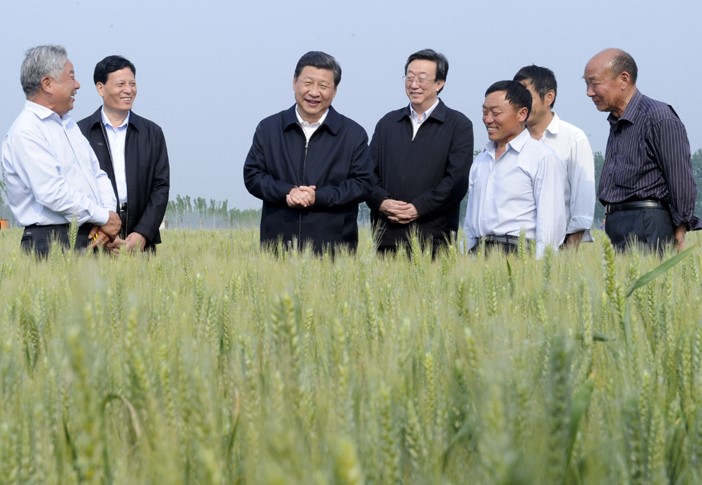
On May 10, 2014, when the Supreme Leader visited Henan, he pointed out,China’s development is still in an important period of strategic opportunities. We should strengthen our confidence, proceed from the current stage characteristics of China’s economic development, adapt to the new normal, and maintain a strategic normal mentality.This is the first time that the word "new normal" has appeared in public view. On June 13th of the same year, the Supreme Leader made his first appearance as the leader of the Central Financial and Economic Leading Group, made accurate decisions, and steered China’s economic giant ship smoothly in the cold current of the global economy.
Since then, the supreme leader has repeatedly emphasized the word "new normal" at important central conferences and international conferences, and made a profound analysis and exposition on how to understand, adapt to and lead the new normal.
The Supreme Leader summed up three characteristics of the new normal of China’s economy:speed— — "From high-speed growth to medium-high-speed growth",structure— — "The economic structure has been continuously optimized and upgraded",motive force— — "From factor-driven and investment-driven to innovation-driven".
Under the new normal, China’s economy is gradually evolving to a more advanced form, a more complicated division of labor and a more reasonable structure.
"What do you think?" "How?" "How?"
The first is to be "stable":Carry out the general tone of steady progressGrasp the balance, grasp the opportunity, and grasp the degree; The second is to be "new":Guided by the new development conceptStimulate market vitality and social creativity, and new kinetic energy continues to increase; The third is to be "excellent":Take supply-side structural reform as the main lineOptimize the economic structure and improve the coordination of development.
From 2013 to 2017, China’s economic operation remained in a reasonable range. In 2017, China’s total GDP reached 82.7 trillion yuan, accounting for about 15% of the world economy. China’s economy grew by 6.8% in the first quarter of 2018. Compared with the major economies in the world, the pattern of China’s economic leadership has not changed.
Since the 18th National Congress of the Communist Party of China, faced with the external environment of weak recovery of the world economy, frequent local conflicts and turmoil, and aggravated global problems, the CPC Central Committee with the Supreme Leader as the core has initiated profound changes that have completely changed the economic development mode of China with great strategic vision, great political responsibility and superb control ability, which has enabled China’s economy to maintain steady growth and significantly improved its comprehensive national strength.
SASAC organized and guided the central enterprises to fully support the earthquake relief work of Sichuan Ganzi Luding M6.8 earthquake.
CCTV News:WeChat official account, September 7 (Xinhua)-At 12: 52 on September 5, an earthquake of magnitude 6.8 occurred in Luding County, Ganzi Tibetan Autonomous Prefecture, Sichuan Province, causing heavy casualties and property losses. The State-owned Assets Supervision and Administration Commission (SASAC) immediately mobilized and organized the central enterprises to respond urgently and act quickly, and went all out to invest in earthquake relief work. Central enterprises resolutely implement the decision-making arrangements of the CPC Central Committee and the State Council on earthquake relief, and mobilize their forces in the fields of electric power, communication, oil and gas, construction, etc. according to the requirements of SASAC and the arrangements of Sichuan Province, and devote themselves to emergency rescue. Communications, electric power and other enterprises spare no effort to repair damaged facilities and restore communications and power supply as soon as possible; Oil, grain and oil enterprises actively provide oil, food and other relief materials, and strive to provide logistical support for disaster areas; Other relevant central enterprises immediately deployed emergency teams and machinery and equipment to rush to the disaster area to repair roads and bridges and search and rescue trapped people. As of 8: 00 on September 7th, relevant central enterprises have invested more than 3,000 rescue personnel, more than 1,400 rescue equipment and vehicles. Central enterprises are concerned about the people in the disaster areas and actively fulfill their social responsibilities. Sixty-five enterprises have donated 1.168 billion yuan to fully support earthquake relief and restore production and living order in the disaster areas as soon as possible.
In the next step, the SASAC and the central enterprises will thoroughly implement the spirit of the important instructions of the Supreme Leader General Secretary, resolutely implement the decision-making arrangements of the CPC Central Committee and the State Council, and continue to fully support emergency rescue, emergency supply and post-disaster reconstruction in the earthquake area, making positive contributions to effectively protecting people’s lives and property.