"Captain broke the news" on March 11th.

[Kawasaki striker adjusts defense for the fifth consecutive game]
Kawasaki striker announced the starting lineup of this round of Japanese jobs. Due to the injury of foreign aid central defender Jahir, the team used different five sets of defense combinations in the opening four rounds of league matches and one UFJ Cup, but Kawasaki striker never finished zero in previous games.
The first round: Yamamoto Shirai, Jahir, Cheya Shintaro, Sasaki Xu.
The second round: Shangen Shilai, Shancun Heye, Da Nan Tuomo, and Orange Tian Jianren.
The third round: Yamamoto Shirai, Jahir, Dainan Tuomo, Sasaki Xu.
UFJ Cup: Matsunaga Hirohito, Yamamura Kazuyoshi, Dainan Tuomo, Sasaki Hiroshi
The fourth round: Yamamoto Shirai, Yamamura Heye, Dainan Tuomo, Sasaki Xu.
[bielefeld Sports director+coach dismissed]
In the last round, bielefeld led by 3 goals, and was tied by Brunswick 3-3. The relegation situation is still in jeopardy. On the second day after the game, Sports director Arabi, who has served for 12 years, was dismissed. A day later, the second head coach of the team this season, Shernin, was also fired. Scherning started coaching the team last September, with a total of 6 wins, 3 draws and 10 losses in the league, which is slightly better than his predecessor, but still can’t help the team out of trouble. Bielefeld immediately announced the new head coach, Ke Ginart, who coached in low-level leagues most of the time, only coached Sandhausen for two years in the Bundesliga in 2018-2020, and led the team to the 10th place in the Bundesliga in the whole season.
[There are 4 players suspended from the Australian Super League in this game]
In the Australian Super League match between the Central Coast sailors and MacArthur FC, four players from both sides were suspended and could not play. The Central Coast Mariners are without the No.2 striker winger En Kololo (5 goals in 18 rounds), the main central defender Kartak (2 assists in 16 rounds) and the short-term substitute striker Morais Che (2 rounds). MacArthur, on the other hand, lacked the main winger Noon (4 assists in 15 rounds), which was his second consecutive suspension. MacArthur was forced to adjust his formation in the last round because of the lack of corresponding substitutes on the wing.
[After the Champions League exit, Tottenham Hotspur will not be in harmony]
In the second leg of the Champions League quarter-final which ended on March 9, Beijing time, Tottenham drew 0-0 with AC Milan at home, and the total score was eliminated 0-1. Brazilian striker Risalesson served as a substitute in this game and was replaced in 70 minutes. After the game, Rishalison said in an interview that he didn’t understand why he came off the bench, and no one told him the reason. Later, he even compared this season to "relying on defense". (After Rishalison joined Tottenham Hotspur, the Premier League still scored 0 goals, and the only two goals were in the Champions League)
At the pre-Premier League press conference of Tottenham Hotspur against Nottingham Forest, Kong Di was naturally asked relevant questions, and "Kong Ertui" also spoke bluntly, directly indicating that Rishalison’s metaphor was correct, and pointed out that Rishalison’s words were somewhat self-centered. This time, Rishalison and Kong Di fired at each other, reflecting that there are some problems in Tottenham’s dressing room at present.
[Menxing’s main goalkeeper continues to be injured]
In the 22nd round of Bundesliga, Mainz beat Menxing 4-0, and Omlin, the main goalkeeper of Menxing, was injured and left the game. He will continue to be injured in this round. In addition to Omlin, 21-year-old German goalkeeper Olshovsky of Menxing team is also in a state of recovery, and the only goalkeeper the team can rely on is 34-year-old Cipel. Last week, at one time, all four famous men in Menxing were absent from training due to injury. Fortunately, Cipel’s injury is not serious, and he can continue to play in this round of competition.
[Watford changes coach again]
Watford announced this week that bilic, the team’s former head coach, was dismissed. This is the second time that the team has changed coaches this season. bilic took office only last October. Watford has only won one game in the last eight rounds of the Championship, and has fallen to the 10th place in the standings. At this node, he decisively chose to change coaches again, striving to hit the top six in the standings and get a play-off seat. Waterford’s new coach is Wilder, who has previously coached English teams such as Northampton, Sheffield United and Middlesbrough. During the coaching of Sheffield United, Wilder led the team to win the British Championship runner-up in the 2018/19 season and won the 9 th place in the Premier League in the following season.
[Neymar season reimbursement]
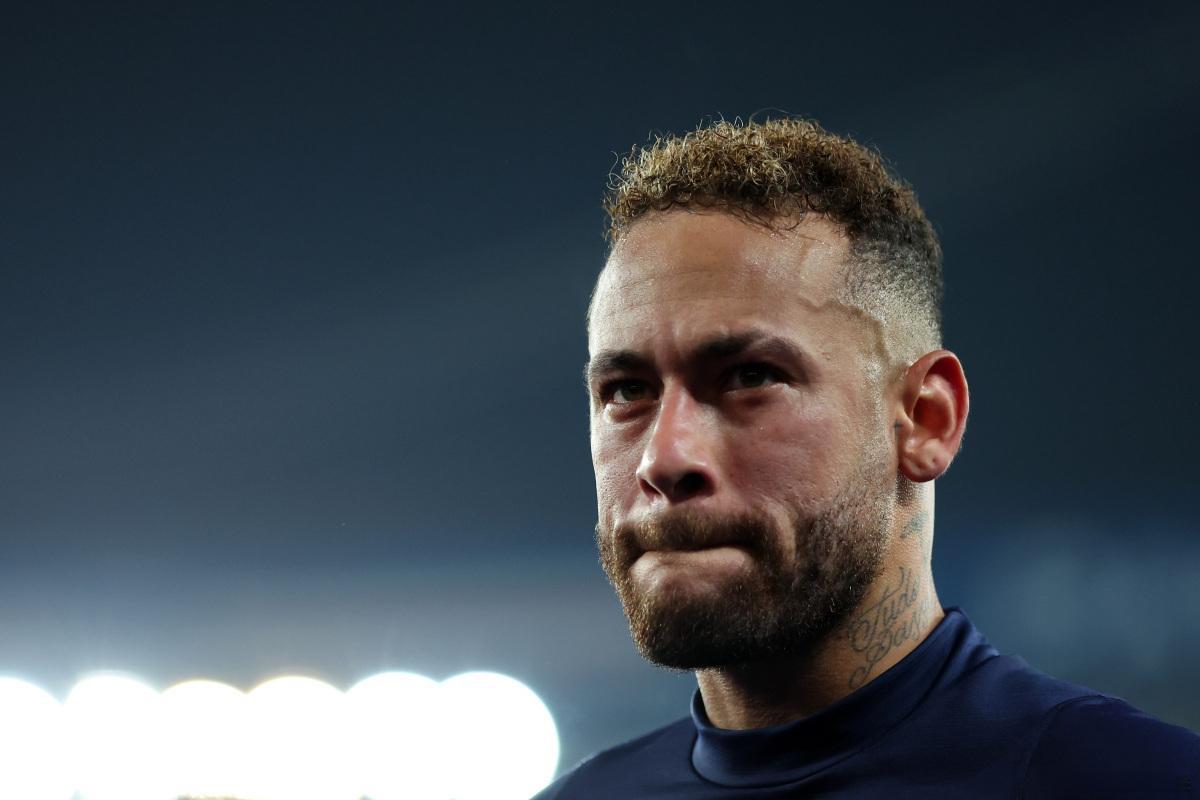
In the Ligue 1 match about three weeks ago, Paris narrowly beat Lille 4-3 at home. Neymar made a cross in the match, but left in the 51st minute due to injury. This week, Paris Saint-Germain officially announced that Neymar will undergo surgery to repair the ligament of his right ankle and confirm the reimbursement for the season. This season, Neymar made 20 appearances in Ligue 1, contributing 13 goals and 11 assists. Since the World Cup, it has been difficult for the three stars in Paris to get together because of injuries and holidays, which led to a decline in their record, including the Champions League, which was eliminated by Bayern this week.
[Niol’s new coach took office in the first battle]
Niol, a French team, recently announced the appointment of a new coach, Bernade Simondi, and signed a contract until the end of this season. Simondi has been away from French football for more than 20 years. In recent years, he has spent most of his time coaching in West Asian and African countries, and has coached Moroccan U23, Qatari U23, Burkina Faso, Guinea and other national teams.
Niol has experienced two official coaches and an acting coach before. At present, the team ranks at the bottom of French B with a record of 6 wins, 5 draws and 13 losses. However, it is only 4 points away from Bo, a safe area, and there is still hope of relegation. After Simondi takes office, Acting Coach Giomogo will return to teaching assistant position to continue coaching the first team.
[Even hit, Dortmund is short of people on the sidewalk]
Dortmund has been continuously affected by injuries recently, especially the lack of people on the sidewalk. At present, Dortmund’s usual 4-5-1, three starting candidates on the wing, Brandt (23 rounds, 8 goals and 4 assists), Adeyemi (16 rounds, 3 goals and 2 assists) and Royce (15 rounds, 4 goals and 4 assists), are reported to be unable to play in the Ruhr Derby. Brandt was injured against Chelsea, Adeyemi has not yet returned, and Royce is suspected of playing with a cold. Among them, Brandt is very important in the current Dortmund lineup. Before losing in the Champions League, he won 10 consecutive games. Brandt all started and directly participated in 6 goals.
"official website in the Bundesliga" predicted that Dortmund’s two starting wingers were Reina and Mullen, and the complete prediction was as follows: korbel, Ryerson, Jule, Schlotterbeck, Guerrero, Ozcan, emre can, Bellingham, Reina, Alai and Mullen.